
Female Directors, Female Gaze

undefined
Volume 5 Issue 5 | July 2011
 

Female Directors, Female Gaze:
The Search for Female Subjectivity in Film

RUBAIYAT HOSSAIN takes an incisive look into women, femininity and sexuality in film.

aparna sen

“A woman’s vocabulary exists, linked to the feminine universe. I feel this occasionally in that I am inspired by a certain number of attractions, subjects which always draw me rather more than they would if I were a man…I don’t want to make feminist cinema either, just want to tell women’s stories about women.”
–Agnes Varda

According to Agnes Varda, one of the pioneers of French new wave movement –a woman whose name is often conveniently overlooked in the main/male stream saga of European new wave — a woman who has been hidden behind the shadows of Godard, Truffaut brotherhood, there after all exists a “women’s visual vocabulary”.

Women’s existence in society and culture places her in a certain parameter from within which space, from within which safe circle of respectability, freedom and individuality prescribed to her by the patriarchal reform agenda — a woman must operate, bearing the burden of cultural, national, ideological, and spiritual iconification. She is never fully recognised as a human subject; either a Goddess, or a Whore, an animal who is only valuable because of her body parts that can give pleasure to men, procreate to continue the patriarchal kinship lineage.

From the vantage point of a woman, reality is not the same episteme we see in the mainstream world of representation around us. Men and women don’t live the same reality. They belong to different plains of power and are meant to see different versions of the same images as they both stare at one single object, or truth, or reality. The phrase ‘personal is political’ was designed to draw attention to the political meanings and imperatives that derive from women’s everyday experiences of their personal and private lives. In MacKinnon’s words:

“To say that the personal is political means that gender as a division of power is discoverable and verifiable through women’s intimate experience of sexual objectification, which is definitive and synonymous with women’s lives as gender female. Thus, to feminism, the personal is epistemologically the political, and its epistemology is its politics.”

Following feminist scholar MacKinnon and filmmaker Agnes Varda, is there a specific currency in which the female film director’s gaze behind the camera must translate reality? Claire Johnston, the first feminist film critic argues that myth invades film representation in much the same way as it does other cultural artefacts, “myth transmits and transforms that ideology of sexism and renders its invisible.” Social and cultural myths about women transmit themselves in the main/male stream filmic representation validating and creating models for real women in the society to follow and perpetuate the myth of the man made female, creating a vicious circle. The representation of women as subsidiary characters to men in main/male stream films not only validates women’s position in society as sexual objects, but women’s role in the ideological realm of the masculine construct of identity and nation-state:

“Iconography as a specific kind of sign of cluster of signs based on certain conventions within the Hollywood genres has been responsible for the stereotyping of women within the commercial cinema in general.”

A woman’s right to her own body, control over her reproductive organs, choice over her pleasures and desires is the first step towards recognising and realising oneself as an individual female subject. This is exactly what a group of female film makers have been consciously trying to capture in their work — the intimate sexual and larger philosophical discourse of a female’s life. As Agnes Varda has pointed out, there certainly is a female visual currency, a female pool of stories to choose from and female sensibilities to represent.

In today’s world there is no ‘one’ feminist ideology or vision, feminism today is not a single vision, it is rather “a visionary way of seeing”. Today there is no ‘one’ type of feminist films, rather there are films made by different women, representing diverse women, depicting ranges of experiences, feelings and senses women feel — elements that never make into the main/male stream currency of images and desire. The masculine visual economy of desire will only place women in a place from where her sexual beauty is desirable and enjoyable, and secondly place women in a place from where she is forever the secondary object, never the central human subject.

Here we begin to tread on uncomfortable territory. When talking about women’s images as currency of desire, should female directors shy away from showing feminine beauty and sensuality? Should female directors, in order to represent their female protagonist as a ‘human being’ and not a sexual object, defeminise the protagonist, strip her of her female beauty, a beauty which may in many ways overlap with the male/main stream cinematic representation?

Take for instance Aparna Sen’s Parama (1984) and Agnes Varda’s Vagabond (1985). In Vagabond we see a female subject and her journey. Mona, the vagabond is dead, and we trace back to her life to find out why and how she died. The answer is chilling: Mona’s (The Vagabond’s) persistence to struggle against both capitalist and patriarchal structures brings her to death, just like the protagonist is driven to death in Aparna Sen’s Sati (1989). Sen’s Parama attempts death to evade the patriarchal structure, but she survives, finally at the end the human subject Parama emerges; as opposed to the prior sexual object Parama, she is now shaven headed, colourless, stripped of the earlier sexual charms.

Agnes Varda said about the representation of Mona in Vagabond: “it’s clear that she died. Alone in a ditch, frozen, which is an awful death. And the way she looks — she is a mess — she’s the colours of the ditch almost, like the colour of gun.” Thus, stripping the female protagonists of her femininity, her beauty, her sexual charm — has been used as a technique by Aparna Sen and Agnes Varda as one way of representing the female protagonists as human subjects. Curiously, years down the road, following Aparna Sen and Agnes Varda’s recent films, we find validation of feminine beauty, romance, sexual fulfilment — quite contrary to their earlier representations. Did these film makers change sides? Or did they simply, in trial and error method live their lives, make their choices, represent women in their films and finally come to a consolidated space to find the female individual subject — a subject that is all too human and all too woman — strong, confident, pretty, soft, emotional, sexual and sensual?

This leads us to a very tricky question: following feminist theorist Monique Wittig if, “womanhood is a myth”, then how much of it is myth and how much of it is real? If women’s economy of desires has been created by the patriarchal masculine episteme, then how do we know what is our real desire as women and what has been imposed on us? Perhaps, the best way is the trial and error method. As women we need to run free with our desires to come to a place when and where we know who we are and what we desire. This is exactly what the recent prominent female film directors have been doing: searching for the female currency of desire to weed out the myth, bringing in front of the world the personally political narratives of women’s lives, and making visible in front of the world images that are feminine; in Varda’s words again, “the woman’s visual vocabulary”.

Agnes Varda, The pioneer of french new wave
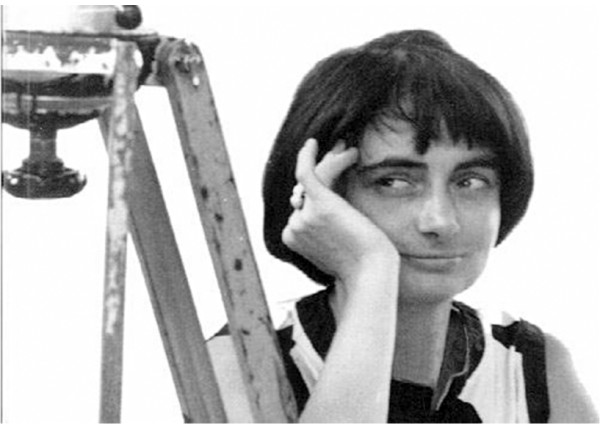
In the past decade very important interventions have been made by female directors to represent the diverse experiences and narratives of women all over the globe. Some of these films have been critically acclaimed, for example in recent times a number of female directors have received prestigious awards in Cannes film festival: Jane Campion (The Piano, 1993, Golden Palm), Andrea Arnold (Fish Tank, 2009, Jury Prize), Samira Makhmalbaf (The Apple, 1998, Official Selection), Nadine Labaki (Caramel, 2007, Camera d’Or), Marjane Satrapi (Persepolis, 2007, Jury Prize). Directors such as Niki Caro with films like Whale Rider (2002, Audience Choice Award, Toronto International Film Festival), North Country (2005), Laurie Collyer with her debut film Sherrybaby (2006, Official Selection Sundance Film Festival), Deepa Mehta with Fire (1996), Videsh (2008) and Susan Streitfeld with her hugely controversial film Female Perversions (1996) have made extremely important contributions to the examination, analysis and construction of the female subject in film.

Finally with Agnes Varda’s autobiographical film, shot on the occasion of her 80th birthday, The Beaches of Agnes (2008), Aparna Sen’s Mr and Mrs Iyer (2001) and The Japanese Wife (2010), and Niki Caro’s Whale Rider (2002) — the journey to find the consolidated, at ease, at peace individual female subject seems to have arrived at the doorstep of female representation in film.

Psychoanalytic theory, especially with the influence of Freud and Lacan has put sexuality as the centrepiece touchstone to theorise identity formation process. In the language of film searching for subjectivity through the exploration of sexuality has been a very prominent theme in the recent female directors’ works. Parama, Fish Tank, The Piano, Female Perversions, Sherrybaby, Caramel, Fire, Water — all these films deal with woman’s journey into finding herself through the route of sexual exploration. This exploration in some cases remains within the straightforward parameter of breaking social taboos and opting for greater freedom over one’s body. For instance, Aparna Sen’s representation of Parama’s extramarital relationship with a younger man, the lesbian currency of desire created by Deepa Mehta in Fire, Lebanese women’s struggle to gain more control over their sexual life, pre marital sex, quest for love represented by Nadine Labaki in Caramel — all demonstrate women’s social and cultural struggle to gain control over their bodies, their desires and in doing so attempting to sketch out a path to find their individual selves.

Makhmalbaf’s The Apple, or Marjane Satrapi’s Persepolis demonstrate the social struggle against conservative Muslim cultural norms and local practices that restrict women from let alone exploring their sexuality, but showing their faces unveiled in public.

The films of Jane Campion, Andrea Arnold, Laurie Collyer, Susan Streitfeld go very deep into the female sexual psychology to trace out the process of female identity formation process and the desire of her unconscious that drives her sexuality to create an identity where she will perform according to the male desire. Her adherence and resistance to perform this role is something these directors have very successfully represented in their films. Jane Campion’s The Piano’s protagonist — a woman who does not speak, but plays the piano with passion and senses, finds herself in a troubled relationship with a tribal man who at one point sexually abuses her, takes advantage of her. But in some crooked way, she falls in love with him and him with her.

Now, whether or not this kind of relationship is politically correct according to the feminist ideology is a separate issue. What is interesting is that Campion has successfully explored and represented this dark side of the female psyche with extremely beautiful, poetic and feminine images. Campion has engaged to ponder the price we pay as women for growing up in the episteme of masculine sexual economy — we learn to sleep with the enemy, take pain as pleasure, love the oppressor, sexually desire the killer. In Jane Campion’s erotic thriller In the Cut (2003), the protagonist is immensely attracted to and sexually involved with a man who is a serial killer, a man who kills women, cuts the body parts into pieces and throws them in body bags or down the garbage disposal.

Andrea Arnold’s Fish Tank deals with a coming of age girl of 15 who is metaphorically and visually juxtaposed in the film to a chained horse. Fish Tank’s protagonist has a troubled relationship with her mother — a mother who is a sexually starved-drunk-drugged woman in the ghettos of London. The young protagonist falls in love with her mother’s lover, the so-called caring father figure. She ends up sleeping with this man, and when the man refuses to engage in the relationship any further because she is too young, she follows him to his house. When she finds that he has a wife and daughter, she tries to kill his daughter by drowning her in water. The Freudian sexual discourse has been played out in this film where the young girl is at the same time finding a lover and a father in her mother’s lover — she is contending the man’s lover (her mother, whose lover she wants) and the man’s daughter (the daughter she wants to be).

Finally, Susan Streitfeld in Female Perversions gives the most vivid, elaborate, accurate representation of what women become by living under the patriarchal sexual economy. In the beginning of Female Perversions a text appears, providing definition of a perverted object as something that has been restricted to grow in its natural way and forcefully grown into an unnatural shape. Thus, by the title of the film Streitfeld is actually making a point about the patriarchal hegemony — a system of power that forces women to deviate from growing into their original forms, and into ‘perverted’, ‘unnatural’ objects.

Streitfeld’s protagonist, the paranoid, success hungry, outwardly confident, but inwardly extremely insecure and vulnerable attorney who sleeps with both men and women and lies her way around to make it to becoming a judge breaks down one day and goes to spend the night with her sister. While at her sister’s she has a dream, not really a dream, but recollection of an old memory: her father was reading in his study, her mother came in wearing an attractive outfit, sat on her father’s lap and asked for sexual attention. The father blew her away rudely with his fist, she fell on the ground, her nose bleeding. After having this dream the attorney wakes up screaming next to her sister saying, “do you know what I did? I didn’t go to her, I went to him.”

The ultimate complexity of women’s sexual psychology that enables her to live with the oppressor and evolve to love him and stand by him has perhaps not been better depicted in any film than Female Perversions. In all these narratives I describe, at the end the female protagonists get some sort of a resolution, they either go away, or settle with the lover, or realise their inner complex of loving the oppressor and seek to find a way out of it. However, these narratives remain only the first step towards realising the full potential of female subjectivity. Sexual exploration, experimentation and freedom can be the first step, but dwelling in this step a woman will not gain individual subjectivity; rather, prolonged fixation over sexual exploration as a tool to gain subjectivity will drown her further in the masculine sexual economy of desire. This is why, in all these narratives the directors show at least some level of departing from the plane of sexual exploration as the way to find identity and subjectivity.

To put the abovementioned narratives of female sexual deviation in the theoretical context, it is perhaps helpful to revisit Lacan’s discourse of female subjectivity. According to Lacan, the girl’s acquisition of her gendered identity requires the acceptance of her identity as lacking what her mother wants, of what marks cultural identity and power, namely the phallus, the man, the power and his position as the central subject [similar notions explored in Andrea Arnold’s Fish Tank]. For Lacan, the difference between a young girl and boy is that the girl, as lack, is constituted as a site of negativity; although both genders lose the fusion with the mother’s body, the girl additionally loses any sense of the legitimacy and wholeness of her own body because she lacks any straightforward possibility of identification with the legitimising primary signifier, the Phallus, the Father, the law of the father.

Women in Lacan’s terms represent “the lack of the lack” and her only way out of this lack is to perform the gender role men want her to perform, to see the desire in his eyes for her, and by doing so getting as close as possible to the ultimate object of desire — the phallus — the centre of power — only by reaching this place a woman may gain subjectivity, but since she can never get there the process of gaining a woman’s subjectivity remains unfulfilled in Lacan’s discourse.

Luce Irigaray, a rebel out of Lacan’s school — a woman who challenged masculine philosophy and showed ways to build a female language to author female subjectivity concludes that female subjectivity cannot be articulated within Aristotelian logic. Irigaray rejects the coherence and forcefulness of analytic argument. She defies Lacan’s theory about ‘women as the lack of the lack’ and proposes a new language to understand the identity formation of the girl child. Like Agnes Varda claimed “women’s visual vocabulary”, Irigaray came up with the notion of ‘parler-femme’ [speaking (as) woman]. Irigary has theorised culture and language as phallocentric and unable to express the female currency of desire. Thus she proposed a feminine way, a way out of logic and currency of masculine vocabulary to find women’s individual subjectivity. Irigaray does not believe in the school of feminist thoughts that attempt to abolish the category of gender binary altogether. For her, the demand for equality as a woman is a mistaken expression if a real objective: “to demand to be equal pre supposes a point of comparison. To whom or to what do women want to be equalized? To men? To a salary? To a public office? To what standard? Why not to themselves?”

For Irigaray, it is important for both men and women to discover the new men and women who could coexist together. Women should continue to search for themselves in the feminine language, feminine economy of sexual desire, but at the end of the day, women must finally create their subjectivity based on the idea of a spiritual Divine,

“If she is to become woman, if she is to accomplish her female subjectivity, woman needs a God who is a figure for the perfection of her subjectivity…Divinity is what we need to become free, autonomous, sovereign. No human subjectivity, no human society has ever been established without the help of the divine. There comes a time for destruction. But before the destruction is possible God or the gods must exist”

Agnes Varda and Aparna Sen have seem to have reached a space where they have out run the necessity to show disturbed female embodiment of sexuality and search for subjectivity. In Aparna Sen’s representation of the mentally challenged woman in 15 Park Avenue — the protagonist who disappears into the oblivion of madness due to her insistence of getting the patriarchal prescribed notion of love, marriage and happiness — Sen has created the new female, the woman who can love and contain the ‘Other’ within herself and make the journey to create a ‘new’ man along the process. In Aparna Sen’s The Japanese Wife and Mr and Mrs Iyer, the female representations are very different from that of Parama and Sati. Sen’s protagonists are now in charge, beautiful, sexual, happy and moreover able to create a ‘new’ relationship with men where the woman retains her subjectivity and the ‘new’ man enters the feminine domain of love and coexistence. Perhaps with time, with life, and with experiences Aparna Sen, as a woman in real have reached a consolidated space and that is why she is able to give us the ‘new’ woman in her recent films, where the journey from sexually volatile, fractured female subject emerges as the ‘new’ woman — a woman way too comfortable in saris and feminine charms, kindness and love.

Niki Caro’s Whale Rider brings forth the narrative of claiming a little girl as the prophet of a community, thus seeking the Divine as Irigaray has mentioned in her work. Against all social odds and taboos, Caro’s protagonist establishes herself as the prophet, breaking the myth that only men can be prophets, spiritual leaders and reach the highest state of spiritual excellence. Deepa Mehta’s Videsh departs from the masculine realm of logic and creates a surreal environment where the magic, potions, and superstitions of the private feminine domain appears as a sight of resistance. The protagonist of Videsh is able to conjure up a snake with magic potions in order to fight with reoccurring domestic violence.

The latest film of Agnes Varda, The Plages d’ Agnes or The Beaches of Agnes (2008) is possibly the most successful experimentation by a director to represent the nature of cinema and the deconstructive approach to represent the director within the frames her film. This film begins with Varda setting up pieces of mirrors on the beach and directing her crew. On this beach, she will narrate the story of her entire life: from a little girl growing up and becoming the 80-year-old woman she today is. The images are exquisitely pretty, the use of humour, cartoon, silly female charms, in depth narrative about her relationship with her mother, her husband, her children, the letters she wrote to her unborn child about the father, the love between her and her husband, her career as an independent producer and director, her involvement in the feminist movement, her trips to Cuba and China and finally the death of her husband all feature in this film. Varda talks about the unfortunate exclusion of her as a film director from the grand narrative of New Wave, even though her film Cleo was among one of the very first films of the New Wave.

In one sequence of the film Varda is talking about her love for the beaches and the sea. She says, “beautiful oyster, beautiful waves, the new wave”. As the image of an oyster, resembling very much the female genitalia, dissolves into images of waves on a shore, the cartoon character appears and asks in a funny tone, “Hey oyster! Mussel! Wave! Enough! Tell us instead about the birth of the New Wave.” Another image appears on screen: Varda shows a still image of herself in the middle, index finger on her lips, all around her the pictures of male film directors of the new wave; the cartoon character asks, “Trufaut, Godard, Resnais, Chabrol, Rivette, Demy, And you Varda?” Agnes Varda took her exclusion from the main/male stream patriarchal saga of filmmaking with a twist of feminine sense of humour because she has already created herself as a female subject. Even if she has been hidden behind the shadow of her male counterparts, history will seek her out.

In another image we see Varda dressed like a queen, sitting on a very colorful seat in the belly of a huge colorful whale made out of paper. She says, “nothing could beat surrealist poets and painters, mad love, Baudelaire, Rilke, Prevert and Brassens. We played chance. I feel safe in this belly of this Whale. Shelter from the world.” Then we see her, sitting on chair after her 80th birthday party with a picture of herself framed in her hand. The images dissolves into the small frame, another frame appears and dissolves, as the images keep dissolving into one another, Varda says, “It all happened yesterday and it’s already the past. A sensation combined instantly with image which will remain, while I live, I remember.”

In the end sequence of the film we see Varda sitting in a room on film cans. The walls of the room are made of exposed film strips. She says sitting on cans of exposed film prints,

“once upon a time I made a movie with two beautiful actors which turned out to be a flop. I got all the cans, and unrolled the reels, and two good and beautiful actors became walls and surfaces, bathed in light. What is cinema? Light coming from somewhere, captured by images, more or less dark or colorful. In here it feels like I live in cinema, cinema is my home. I think I have always lived in it.”

Varda seems safe and sound in the belly of the whale — the female world, the currency of female desire and vocabulary of female images, the female subject that she has become and depicted in cinema, the female gaze and female subject she has created for herself and for the next generations of women to come.

Rubaiyat Hossain is a filmmaker and researcher.

© thedailystar.net, 2011. All Rights Reserved 
source link : http://www.thedailystar.net/forum/2011/May/female.htm
Posted in Uncategorized | 11 Comments

‘Women as Nation’ and ‘Nation as Women’

undefined
Volume 5 Issue 4 | April 2011
 

‘Women as Nation’ and ‘Nation as Women’:
Literary solutions to the Birangona problem

RUBAIYAT HOSSAIN examines the representation of the Birangona in fictional literature as a larger picture of the role of women in nationalism.

Photo: ZAHEDUL I KHAN

The iconification of ‘women as the nation’ creates a framework of imagination where women’s bodies appear literally as the map of the country. The spatial connection drawn between the female body and the territorial landmass symbolises women as the nation. Rabindranath Tagore’s famous song, ‘Amar Shonar Bangla’ or ‘My Golden Bengal’ uses this template of representation as the landscape of Bengal transforms into different parts of the female body. The mother’s face, her smile, the ends of her sari all become diffused in the visualisation of the nation as the female entity assumes a maternal role:

“Oh mother, in autumn, I have seen your sweet smile in the harvesting fields, Alas! What I behold, your sweet smile, my golden Bengal, I love you…what a sight, what a shade, what gentle love, what attachment you have spread with the ends of you sari…”

As the ends of the mother’s sari become the umbrella of national solidarity, motherhood is politicised and “stereotypically situated” (Mookherjee 2003) at the breaking down point between the public/private dichotomy. The iconificatoin of ‘women as nation’, on the other hand, imposes the qualities of the nation on to women. Nineteenth century Bengali nationalism sought its unique, spiritually superior and private domain of nationalism by locating unique national attributes in women. Women, thus, became the ground upon which nationalism flourished and modernity was authored. For example, the 19th century Bengali nationalist interpretation of the word ‘freedom’ differed from the Western notion. It was argued that in the West, ‘freedom’ meant jathecchachar, to do as one wished, and the agency to self indulge; in India, however, ‘freedom’ meant freedom from one’s ego, the capability to sacrifice and serve willingly. Imagining ‘nation as women’ thus, operates with the logic of imposing national cultural attributes on women, resulting in the deliverance of a circumcised notion of individuality to the modern Bengali woman.

Women’s bodies with its reproductive capacity, symbolic significance, and socially prescribed feminine attributes become an integral part of national imagination of cultural identity and political solidarity. The national “battle over the cradle” (Peterson 1998), thereby, appropriates its authority over women’s reproductive activities. In this context, raped women even though, impregnated involuntary, fall in the category of having stepped out of the national mold of women as subvert and chaste cultural symbols. The loss of women’s chastity results in the visibility of women’s sexual and reproductive activities outside the kinship of family network unauthorised by patriarchal nationalism. Being raped and carrying a war baby brings out the individualistic expression of the female sexuality into the uncomfortable zone of the public, thus, the appearance of these women calls into question the ambiguity of Bengali modernism, which fails to deliver individualism to its women, “[It] is this double helix of the posturings of modernity of the progressive middle class’s resistive politics along with hypocritical value judgment and moral positions that place the raped woman in a place of taboo and transgression” (Mookherjee 2003). As Nayanika Mookherjee argues in her article “The Body-Politic of Raped Women and Nation in Bangladesh”, the appropriation of Birangonas is then made possible by the “aestheticization of rape” and the “mothering of the raped woman”. However, as I will argue, the literary representation of the raped women does not only limit itself to the feminisation of nature and mothering of raped women, but engages in a multilayered literary approach towards neutralising evidence of women’s sexual and reproductive activities outside the socially sanctioned marital affinity.

The multilayered literary solutions offered to the Birangona problem unfolds on the premise of rendering rape and unwanted war babies in coherence with the national imagination of women as chaste, sacrificing, loyal in upholding the nation’s superior cultural identity and continuing the national solidarity and kinship. The loss of chastity and women’s reproductive activities outside marriage is reinterpreted in this context by understanding rape not as violence against women per se, but as women’s unlimited capability to endure pain and self sacrifice for the cause of the nation. Similarly, women’s unauthorised reproductive activity is rendered unproblematic by flipping the passive role of the womb as a tool of ethnic cleansing to a tool of extending the family kinship. This template of representation erases women’s individual accounts of rape and blends them into the glorious narrative of nation. However, in order to understand the pattern of literary and visual solutions offered to the Birangonas, one would have to understand the politics of Bengali masculinity, and the symbolic significance of women in the trajectory of Bengali national imagination between 1947 and 1971.

Certain ideals and practices of female sexuality was central to both the Bengali Hindu and Muslim imagination of the colonial construction of ‘the private’ — a site from where nationalist movement would eventually be launched. Chastity, selflessness, obedience to the family and finally the assigned position of women in the spiritual realm was further layered by the social institution of purdah for Bengali Muslim women. Purdah was widespread both among Hindus and Muslims, though for Muslim women the measures were more strict. They were not allowed education until the later part of the 19th century, whereas, Hindu girls going to school had become prevalent both in urban and rural areas, “as for the Muslims in Bengal, a large section of the community were opposed to education for women on the grounds that it would violate the sacred custom of purdah” (Amin 1992, 740). For Muslim women the initiative for establishing educational institutes for girls came from women themselves, Faizunnesa Chaudhurani (1847-1903) established a girls’ school in Comilla in 1873 and Begum Rokeya Shakhawat Hossain established a girls’ school in Bhagalpur in 1909 which she moved to Calcutta in 1911. The notion of purdah is directly in link with keeping the feminine and masculine attributes separated and distinct. It is articulated by contemporary fundamentalist leaders like Maulana Matiur Rahman Nizami in Bangladesh that public surveillance of women reduces their fertility. The beauty and sexual appeal of women is also named devious and destructive for the public sphere of society. Thus the added burden of Muslim Bengali women is the over-emphasis on purdah, which denotes a stricter management of female sexuality and more restrictive measures against her mobility in comparison to Hindu women.

As Bengali women of East Pakistan, Muslim or non-Muslim, became the target of racialised gender specific mass violence propagated by the West Pakistani Army, the Bengali women actually became the battle ground between West Pakistani Muslim masculinity versus the East Pakistani Muslim masculinity. The East Pakistani people were considered less Muslim than the West Pakistanis since “poor Muslims of lower profession in rural Bengal retained many of the customs and manners of Hinduism from which they were largely converted” (Shah 1992), and the Bengali passion over the language and literature further emphasised the cultural division between West and East Pakistan. Women in this cultural debate, yet again, became the contesting ground. It would be faulty not to mention that, from the inception of Pakistan, women have been an active force in politics, especially in Communist peasant movements and student movements in the Eastern wing. East Pakistani women’s mobility and cultural affiliation with the so called Hindu culture became the moral grudge of West Pakistani authority:

Photo: ZAHEDUL I KHAN

The attitude of the ruling power was always disapproving of Bengali culture and its latent nationalism especially in the formulation that culture received in the life-styles of Bengali women. Thus in the cultural milieu of the period immediately preceding the mass uprising of 1969, all the cherished cultural paraphernalia of Bengali life, the red and yellow festive sari worn by the women, the ‘tip’ on the forehead, the local flowers, melas or fairs, the Bengali diet of puffed rice and molasses, Tagore songs, and poetry sessions, assumed the significance of a symbolic protest–a form of cultural resistance.

When Bengali women were raped in 1971 it was not only women’s bodies that were violated, but the very sense of Bengali masculine pride was violated “[T]hese horrifying actskillings, rape and the mutilation of women and children — are understandably an embarrassment to the sensitive people of Bangla Desh now locked in the battle for their homeland” (Mascarenhas 1971). The mass rape of Bangladeshi women created a moral dilemma of Bangladeshi masculinity, which failed to provide any strategic protection for its women at a moment of crisis. The very question of national integrity was at stake, and the superiority of West Pakistani Muslim masculinity loomed large over the Bengali Muslim masculinity. In the British colonial context, Bengalis had been identified as the non-martial race by the British, but Muslims in general were thought to be more masculine than Hindus. When Pakistan was created with two wingsthe Bengali Muslims were identified as “gentle and artistic” (Aziz 1974), and the “official recognition of the superiority of the West Pakistanis over the East Pakistanis as ‘Martial Race’ to rule over the East Pakistanis” (Khandaker 1977) a scale of masculinity was created where the West Pakistanis held the highest rank. Bengali representation in the military service was minimal and Ayub Khan in Friends Not Masters clearly and vulgarly claimed the superiority of West Pakistani masculinity. All these factors accentuated the crisis of Bengali masculinity in the newly formed nation. Thus, successful management of this crisis was vital in restoring the supremacy of Bengali masculinity.

The literary solutions offered to the Birangona issue tackled the crisis from several different angles. First of all, these women never appear as individuals, but always as someone’s mother, daughter and sister, however, never as wives. Secondly, these women always appear as peripheral characters and never as main subjects. The incidents of rape and women’s trauma, therefore, are merged into the larger landscape of military atrocities. In this landscape there is no particular difference between the hay stacks burning, villages massacred and women being raped all at the same time. Often a line of respectability is drawn between the author and the rape victims where chastity yet is represented as women’s most valuable possession, a loss of which is incomprehensible to the author as he/she laments for ‘others’ who have lost it. Bulk of literature on 1971 and special volumes on women’s contribution to the freedom movement represents women as mothers in which context she is completely stripped out of her sexuality and represented as the eternal icon of love, sacrifice, endurance and service for the patriarchal nation. It is this mother’s spiritual high ground that is glorified in the larger literary template of rendering rape or the loss of chastity in coherence with national morality. However, there are very few literary pieces that speak directly about victims of rape and the social aftermath of it.

Mainstream Nation Literary Representation: “In order to protect their sacred izzat from West Pakistani invasion, they heroically jumped down from the roof one after another…”
Radio Bangladesh in 1971 declared that “of all the outrages of Yahya against the people of Bangladesh the one that closely follows the act of genocide has been the violation of Bengali women with senseless brutality” (Alamgir 1984), but they also did not forget to ask the most crucial question, “who will be responsible for these products of sadistic crime? What will happen to these unwanted but otherwise innocent children?” (Alamgir 1984). The concern here is not the women who were violated, but the illegitimate children they were going to produce. This attitude dominates the national archive of ‘Banglapedia’ where Biranganas appear as a footnote to war-babies. Women’s death prior to the violation of their izzat is glorified in the nationalist narratives such as Muhammad Nurul Qadir’s Dusho Cheshotti Diney Swadhinota (Freedom in 266 Days) to an extent that the mass rape of Bengali women at Rokeya Hall (the largest women’s dormitory in Dhaka University) during Operation Search Light on March 25, 1971, is eliminated from his narrative,

Even though the Bengali women fought for their ijjat and the freedom of Bangladesh, they failed against the armed military force. In order to protect their sacred ijjat from West Pakistani invasion, they heroically jumped down from the roof one after another. They preferred death with smiles on their faces, rather than staying alive and becoming prey to the barbaric military force (Qadir 1997).

The report provided to the Bombay Weekly Biltz (April 6, 1971) by British businessman A. Sanders contradicts Qadir’s description of what actually happened at Rokeya Hall. Whereas Qadir’s narrative denies any incident of rape committed at Rokeya Hall, Sanders’s narrative reproduced in Jag Mohan’s The Black Book of Genocide in Bangladesh testifies to the fact that, mass rape of Bengali women was indeed committed at Rokeya Hall. Such is the nationalist narrative that denies mass violence against women and declares them dead prior to enemy invasion.

Literary Fictions: Motherhood is Sublime!
Women’s role in 1971 in the fictional genre is glorified primarily as mothers. As women are represented as mothers their sexuality automatically is muted and their sexual activities only remain visible in the realms of reproduction and child rearing. The identification of mothers as the nation draws a parallel between the mother’s endless endurance and the national resilience to survive against the odds. The mother is also viewed as the singular entity who at all times, and under all circumstances denies to let go of the glorified memories of those sons who shed blood and died in 1971.

There exist fictional works of female authors that represent raped women as subjects and carriers of war babies. Here, the topic of rape is dealt with intricacy to locate a sense of purity even in the context when chastity is lost. I will discuss Selina Hossain’s Kath Koylar Chobi or ‘Charcoal Drawn Picture’, and Shayamali Nasrin Chowdhury’s Nirudishto Maayer Khoje or ‘In Search of the Lost Mother’ to demonstrate how chastity is restored in the context of rape.

Nirudishto Maayer Khoje is a story about Jim, a war baby who was adopted by a Canadian family in 1972 and comes back to Bangladesh is search of his mother in 2003. As soon as he lands at the Dhaka airport he feels a ‘naarir taan’ or the pull of the mother’s umbilical cord and the immediate connection between the biological mother and the mother nation is drawn. As Jim goes on looking for his mother with the help of a NGO worker he encounters the hidden stories of women who were raped in 1971. The search goes on without much success as most women remain unwilling to speak. Finally a letter arrives from a woman named Bokul with some news of Jim’s mother. Bokul was in the same room when Jim’s mother Naznin gave birth to him in the rehabilitation center in Dhaka. Bokul testifies that Jim was not after all a war baby, because he was conceived when his parents were still together before the war separated them. Bokul sent her blessings to Jim and reaffirmed her need to remain unindentified as her current family life could be disturbed if the past was revealed. In the last scene of the book Jim travels to his mother’s village only to find that the whole village now was under water. There was no trace of even the land where his mother had stepped her foot on, “the last sign of remembrance, the village…even the village was under water! Father, mother, grandfather, grandmother all are gone! Even the village!” Jim insisted that their boat be taken to the exact spot in the river where the village once used to be. Touching the water and being bathed in the rain Jim felt,

Even if everyone else may leave me, my country will stand by me. Today I am without any burdens, I am free. I do not have an identity crisis anymore. The disgrace of ‘war baby’ has been lifted from my head. Like all others, I am also the sign of my parents’ love. (Chowdhury 2004).

Even though the novel addresses the issue of women’s sexual slavery at the Army barracks, mass rape of Bengali women and the consequences of war babies, the disclosure, recognition and self-identification of women as sufferers of rape is completely absent. The Birangonas in the novel are living without revealing the experiences of 1971. One woman Jim meets in a village, comes wearing a burqa and says, “I don’t wear burqa to observe purdah, rather, I wear it to remove myself from public gaze, otherwise people still point fingers at me” (Chowdhury 2004). As these women hide themselves and their stories from the public gaze, the only pre-condition for them to exist becomes the very denial of rape as a crime inflicted on their minds and their bodies. Chastity is located in Jim’s mother Naznin, who even after being detained at the Army barrack secretly prayed for her baby to be safe, as she considered the baby as the last sign of her husband. Her devotion to the child and ultimate mental breakdown and death after the child was given up for adoption validates motherhood and women’s commitment to sustaining the family heir or the national kinship network. Finally, with the entire village submerged under water even the grounds upon which Naznin once walked upon was annihilated and purified by the river.

The very presence of Birangona is set on a literary platform where chastity is re-entered by denying existence, autonomy and individual voice to the women. They could certainly exist, but, under the mass head quote of, “two million mothers and sister’s lost their izzat” which yet again denotes that it was the loss of chastity that was the key factor. Recognition of women as human subjects and rape as a war crime becomes irrelevant — not worth restoring in the national moral imagination. It is chastity, the magic element, which needed to be restored. Even the literary solutions offered to the Birangona problem by most prominent female writers in Bangladesh deeply sympathetic to the cause, strictly follow this nationalist pattern. As motherhood works as a force to dilute the threat of Birangona’s sexuality, Selina Hossain in her novel flipped the notion of womb from a passive object to a space of resistance and agency.

Kath Koylar Chobi is a story of Dulal, another war baby from Canada who comes back to Bangladesh to find his mother in 2000. Unlike Jim from Chowdhury’s novel, Dulal brings with him his mother’s address, which his adopted parents had collected at the rehabilitation centre before taking the child away. Dulal, however, is HIV positive and this makes the search for his mother a story of death and lost identity. He attempts to piece together an identity for himself before he prepares for death. In a parallel story line, we meet Choiti Rani, an old woman working as a day labourer at a tea estate in the North Eastern part of Bangladesh. Choiti Rani’s family was brought to this area by force during the British colonial period. Choiti Rani and her community lost their tribal kinship and community and lived as outsiders in Bangladesh, working under inhuman conditions with very little pay from the tea estate. There always remained a great desire for this community to go back to Assam where they had originally come from and re-establish their own clan. It is this desire of establishing a clan and starting a new social order away from the oppressive structure imposed at the tea estate that drive Choiti Rani’s narrative forward.

Choiti Rani was married as a young girl and her husband died shortly after. She was then raped by the Bengali tea estate manager and eventually taken into the Army barracks during the 1971 war. She kept her son from the first rape, but the second one was taken away from her by force at the rehabilitation centre. Choiti Rani named her first son, Kukua Kanu and imagined him to be the head of the new clan she is to establish. As Kukua Kanu did not have a father’s identity he was independent to start a clan of his own, as Choiti Rani said, “because he doesn’t have a father, he will be the prodhan or the chief. He will grow with his own identity and name. There will be no father figure over his head” (Hossain 2001). Later, Choiti Rani initiated a sexual relationship with another tea estate worker Joton to increase the number of people in Kukua’s clan, she approached him saying, “ami Kukuar gotrer ak ek jon manush barate chai” meaning, “I want to increase the number of people in Kukua’s clan” (Hossain 2001). A woman’s role as the biological reproducer of the nation reaches its ultimate height with Choiti Rani literally using her fertility to give birth to new members of her clan. The spatial attribute of the nation is imposed on Choiti Rani’s body as it is visualised exactly like a fertile piece of land, ready to be ploughed and grow green in crops:

Joton feels that Choiti Rani’s clay body is amazingly fertile. As if it doesn’t have a shape. As if her entire being is like a spread out farming field. Wherever Joton puts his hands, grass grows, and wherever he puts his lips, grass grows. The barren land turns into a wide meadow, ready to welcome new settlements. (Hossain 2001).

The entire idea of rape and forceful pregnancy is flipped in this context to make the womb and the female body a space of resistance and rebellion holding the agency to rebuild the nation by literally biologically reproducing the members of it. It is this particular use of the female body and its biological functions that renders the incident or rape and loss of chastity unproblematic, even glorious in this narrative.

In course of time, Choiti Rani loses her first son (whom she got from the Bengali manager) Kukua Kanu and decides that Kukua Kanu’s son Agun would be the head of the clan. As time passes, the oppression of the tea estate authority reaches its peak and Choiti Rani loses her fertility to give birth anymore. With her only son dead she is stuck at a point from where she would have to wait a really long time for her grandson to grow up and have babies. It is a perfect moment for the new and long lost clan member to arrive,

Choiti Rani feels she can’t stand up anymore. It is not Dulal who is standing in front of her, but the entire Muktijuddho of 1971 was standing there. Military atrocity was going on every day and women were tortured. The blood of their body, the blood in the wounds — like red blood jabas. She stands face to face with Dulal and says, ‘I never found my younger son. He was born two months after the war. His father is one of the Pakistani militaries at the camp. I don’t really know who his father is. Neither do I care to know about the father’s identity. I know he is my [my emphasis] son. I have been waiting for my younger son. I still have hopes that he is alive and one day will come back to me. I heard you came here in search of your mother. Will you tell me your mother’s address? (Hossain 2001).

Choiti Rani’s emphasis on the mother’s identity and not the father’s is a technique that has been used by Selina Hossain to locate agency in the woman, but this agency is only delivered to her when she assumes the role of a willing mother ready to endlessly biologically reproduce the nation. It is at this juncture that Choiti Rani is redeemed of her disgrace of being raped and losing her chastity because of the transformation of her entire self into the vehicle of continuing the community kinship network. It is yet again, through the light of the virtuous presence of motherhood, the literary narratives to render the figure of the raped woman and her loss of chastity sublime and spiritually uplifting to the national moral imagination. It is only by assuming the role of a mother that the raped women are allowed to exist in literary representation where the topic of rape is yet again, further removed from the context and the rectification of chastity becomes the grand narrative:

Dulal’s [the war baby] voice ‘Maa…Maa’ spreads all over the tea estates and open meadows. Thunder lightening came from that call with scattering lights. As if the light was standing on the tea garden and Kukua saying, God has come to my virtuous mother. Megh Boraik saying, there is no sin on my virtuous daughter (Hossain 2001, 219).

One must note that Selina Hossain locates her narrative of the raped woman in the tea estates in a migrant community where matrifocal structure could be tolerated. The kuli or day labourer community has a separate set of social norms than the average Bengali community, and it is by creating this safe distance that Hossain situates the incident of rape and the figure of the raped woman in the narrative of 1971. Further distance is created between Choiti Rani (the raped woman) and Bangladesh as a nation by tracing her identity from beyond the borders of Bangladesh by the mechanisms of forced migration. This absurd placing of the Birangona, in this context, highlights once again the need to remove these women as far away as possible from the centre of national imagination. If Birangonas are to be given a space to exist, it is given either by killing them (Nirudishto Maayer Khoje) or by tracing their ethnic and national identity from beyond the border of Bangladesh (Kath Koylar Chobi). It is by creating this distance that the disclosure of the Birangona figure is made possible in the fictional literature work by women.

Rubaiyat Hossain is a filmmaker and researcher.

© thedailystar.net, 2011. All Rights Reserved 
source link : http://www.thedailystar.net/forum/2010/july/women.htm
Posted in Uncategorized | 1 Comment

Empress Extraordinaire

undefined
Volume 5 Issue 3 | March 2011
 

Empress Extraordinaire

RUBAIYAT HOSSAIN traces the intriguing life and persona of the empress, Nurjahan.

JEREMY EDWARDS/GETTY IMAGES

Nurjahan has been made into an icon amongst the Mughal women and her image has been popularised in literature, songs and poetry. However, recent day scholarly studies have somewhat deflated the image of Nurjahan by introducing a whole line of Mughal women who held powerful positions and negotiated important and sensitive political treaties.1 Yet Nurjahan remains one of the most extraordinary Mughal women because of her assertive female individuality that challenged the normative role of a Muslim woman.

When revisiting historical figures such as the Mughal women, especially Muslim Mughal women, it is useful to break down the public-private dichotomy established in earlier historical representations and locate women outside the realm of submissive privacy of the sexualised harem; it is however, also necessary to recognise the unique individual qualities asserted by certain females like Nurjahan, who actually superseded many of her predecessors and successors. It is because of the unique qualities possessed by Nurjahan along with the circumstantial elements that made her stand up as a strong female icon even in the face of orientalist patriarchal historiography.

The implications of contemporary historical recreations of the Mughal emperors are loudly pronounced over the politics of national and communal identity making processes in South Asia. The recreation of Aurengzeb as a liberal king who has actually been tainted by Western scholarship is reproduced in the 2004 version of secondary Bengali history text books published by the national education board of Bangladesh2; such revision is directly linked with the rise of a Sunni Islamic ruling bloc in Bangladesh in 2001.3 As the recreation of Mughal emperors and their roles in history have far fetching consequences in contemporary identity making processes and national politics; one may ask, what implications does the absence of such simultaneous female characters have to reveal about the social role and identity of women in contemporary South Asian societies?

Popular history remembers Shahjahan as a great and eternal lover, but little is known about Mumtaz Mahal in that respect. Similarly, popular history may venerate Akbar or Aurengzeb, however, it is not until specialised scholarly research is carried out by historians equipped with a feminist lens, that we come to find out about the extraordinary political role played by Mughal women, Gulbadan Banu for instance.4 The construction and reconstruction of historical figures in popular imagination is symptomatic of our present day social context. The limited role that has been attributed to modern day Bengali bhadramahila5 cannot possibly fit into its past a Muslim female predecessor who led a pilgrimage to Mecca almost 500 years ago. Thus, Gulbadan Banu figures nowhere in popular history. Similarly, popular history has remained silent about Hameeda (Babar’s wife and Akbar’s mother), Ruqiya (Akbar’s wife and Shahjahan’s foster mother), Mumtaz Mahal (Shahjahan’s wife and Aurengzeb’s mother) Jahanara, Rasuhanara (Shahjahan’s daughters and Aurengzeb’s sisters) Zeb-un-nisa (Aurengzeb’s daughter), and other significant Mughal women. However, Nurjahan somehow managed to seep herself into the realm of popular imagination, as she figures in Bengali songs, plays, novels and TV dramas. Though in these imaginations Nurjahan is actually represented as nothing more than a sensual lover versed in Persian poetry; nevertheless, the important point to note is: unlike other Mughal women, Nurjahan could not be ignored!

The historical sources available in English about Nurjahan can be differentiated into three broad categories, a) European ambassadors’ and travellers’ representations which looked through an orientalist lens, where India always figured as the extreme other, and Muslim women were assumed to be veiled passive spectators of history located in the sexual arena of the harem,6 b) representations by South Asian historians who also participate in constructing the picture of the harem as a realm of primary pleasure and desire, thus women are again stripped off of individuality and historical agency,7 c) finally, the recent re-visiting of Nurjahan that attempts to establish historical agency to her by scrutinising the reasons behind the token iconisation of Nurjahan by the first two categories of representation8.

The Persian chronicles pay considerable attention to Nurjahan9 and she certainly figures as a very important character in Mughal emperor Jahangir’s memoirs, Tuzuk-i-Jahangiri. Taking a cursory look at the gamut of popular Bengali literature, European travellers’ accounts, Persian historians, Jahangir’s memoirs, contemporary South Asian historians, it becomes apparent that Nurjahan has been given her share of historical representation, however misrepresented or wiry it has been.

Then, one may inquire, what is the reason behind such utterance of Nurjahan when history generally remains silent about its female figures? Was there actually anything extraordinary about Nurjahan that won her a somewhat significant role even in an overall patriarchal landscape of history? A critical re-evaluation of the events of Nurjahan’s life can perhaps illuminate the process of iconification of her in history.

Nurjahan was married to Jahangir at the age of 34 and bore no heir for him, yet her name was inscribed on the gold coins, she was in possession of the imperial seal and actively signed farmans.10 As generally assumed by historians, if the importance of Mughal women lay in bearing illustrious heirs, then how can one explain the extraordinary importance of Nurjahan given her childless status? If the importance of women in the harem primarily corresponded with their sexual charms, then what could be said about the legendary partiality of Jahangir towards his favourite wife who was a 34-year-old mother by the time they got married? What could be said about the fact that, three of the most notable Mughal women: Nurjahan, Mumtaz Mahal, and Jahanara all share a lineage of descending from the house of Persian immigrant Asmat Begum and Ghiash Beg?

Finally, let us ponder: does the life of Nurjahan really set her apart from other Mughal women? If she has been iconified, demonised, romanticised, idealised in the popular and historic imagination, then what could be charted as the reasons behind such recreations? Beyond the layers of Mughal historiography, popular South Asian literature and Western scholarship, can we trace the individual woman Nurjahan? It remains a challenge since she did not leave any of her own writing in the form of biography, poetry or fiction. Is it then, possible to reconstruct at least some of her thoughts, aspirations and motives by looking at the literature produced by historians and images that has been circulated about her?

The legendary qualities that have been historically bestowed upon Nurjahan could be attributed to a few events of her life. Firstly, the story of a Persian immigrant girl who was born during her parents’ exile and later became one the most powerful women of the Mughal empire has always captured the imagination of historians as well as popular writers. Secondly, Nurjahan’s marriage to Ali Quli, Ali Quli’s controversial murder and finally, Nurjahan’s four-year long confinement in the Mughal harem after her husband’s death created avenue for dramatisation and much creative speculation. Nurjahan’s keen ability in poetry and literature, her craftsmanship let it be in fine arts, fashion, embroidery, architecture or writing, all gave her a special flare among the Mughal women. Finally, her father Ghiash Beg and brother Asaf Khan’s prominent position in the ruling affairs of the Mughal court and Nurjahan’s close relationship and power over Jahangir labelled her in history as one of the extraordinary Mughal women. Perhaps a discussion about these defining features of her life and the historical interpretation of it is necessary in order to deconstruct the real Nurjahan beyond the layers of historiography.

Story of a Persian immigrant girl born to destitute parents during their exile

The distracted parents finding no alternative, after lingering reluctance, decided to abandon the infant. It was a painful sight. The helpless mother gave a parting kiss to the infant, and handed her over to the husband. The perturbed father carried her to distance and placed her under scanty shade of a tree. He covered her with leaves of the tree and discarded her at the spot on the mercy of the God…
— Saha, B. P. Princesses, Begams and Concubines, Vikas Publishing House, Delhi, 1992.

Whether or not Nurjahan was abandoned by her parents during their journey from Persia to Delhi has been historically contended11, however, this information is widely used in the historical recreation of Nurjahan by South Asian writers.12 The infant who was abandoned, in fact, became the saving grace for her family since she considerably raised her brother, father and niece to very powerful positions in the Mughal empire. This story is underlined with a profound twist of fate and destiny that seems to have become an attractive element for South Asian writers to ponder upon. This dramatic beginning of Nurjahan’s life certainly has created avenue for her to be romanticised.

Her story and that of her family’s also comment on the socio-economic backdrop of the Mughal empire, where it was actually possible for immigrants from all over the world, especially from Persia, to make a position for themselves merely by the virtue of mastery over certain fields of knowledge and expertise in politics, art, religion or culinary skills for that matter. Nurjahan grew up in Agra as her father started working in Akbar’s court, though, little is known about Nurjahan’s childhood. The next historical reference we get of her is regarding her marriage to Ali Quli, his murder and finally Nurjahan’s subsequent confinement into the Mughal harem.13

Jahangir: A persistent lover and a controversial murder
Nurjahan was married to Ali Quli in 1595 and Ali Quli was murdered in 1607. The role of Jahangir in this murder has been historically contended, however, Jahangir in his own writing has seemed to remain ambivalent and rather regretful about this event. It is also noteworthy that, Ali Quli once saved Jahangir’s life from a tigress and he was given the title of Sher-i-Afghan, however, followed by this, a few years later, after Jahangir ascended the throne in 1605, Ali Quli was transferred to Burdawan and he was suspected of aligning himself with the rebellious faction of Man Singh. In Tuzuk-I-Jahangiri this transfer is mentioned and one can hear a tone of resentment towards Ali Quli in Jahangir’s voice,

When I came from Allahabad to wait on my revered father, on account of the unfriendliness that was shown to me, most of my attendants and people were scattered abroad, and he also at that time chose to leave my service. After my accession, out of generosity I overlooked his offences, and gave an order for a Jaigir for him in the Subah of Bengal.14

A jaigir in Bengal was not exactly a very lucrative deal due to Bengal’s far off geographical location in relation to the centre in Delhi. The humid climate in Bengal also made it an unattractive spot. The far off location of Bengal made it susceptible to numerous rebellions, thus Ali Quli was also suspected of rebelling against Jahangir. He was finally killed by Governor of Bengal Qutubuddin Khan, a childhood friend of Jahangir. Tuzuk-I-Jahangiri mentions the incident of the killing with a sense of contempt. Jahangir records the incident under the impression that Ali Quli had actually challenged the imperial authority. In the end Jahangir remarks, “what can I write of this unpleasantness? How grieved and troubled I became! Qutubuddin Khan Koka was to me in the place of a dear son, a king brother and a congenial friend. What can one do with the decrees of God? Bowing to destiny I adopted an attitude of resignation?”15

Some historians directly link Jahangir to Ali Quli’s murder,16 but some contend it.17 However, given Jahangir’s detestation towards Ali Quli in his memoirs, the complicated political landscape of Bengal and finally the interest of Jahangir towards Nurjahan can certainly reveal some connection between Jahangir’s motives and Ali Quli’s murder, especially when most murders in the empire were politically constructed, and Ali Quli and Qutubuddin Khan, those who died in that particular incident held powerful ruling positions in the empire. However, since there is no actual historical reference to support the fact that Jahangir actually met and developed interest for Nurjahan prior to her marriage to Ali Quli, Jahangir’s motives in murdering Ali Quli to marry Nurjahan cannot be proved.

The legendary qualities of Jahangir and Nurjahan’s love story rely heavily upon young Selim’s encounter with Mehirunnessa during a Meena Bazaar.18 This early encounter, Jahangir’s prolonged wait for her, the carefully crafted murder of her husband, her confinement into the harem, her marriage to Jahangir, and finally her becoming his favourite queen, all create a continuum in Jahangir’s emotional journey and justifies and/or explains the reasons behind his partiality towards Nurjahan. Though the early meetings of Selim and Mehirunnessa cannot be historically established, the fact that it has been so strongly established and widely circulated in later European travellers’ accounts and contemporary South Asian narratives, I would argue is symptomatic of the patriarchal historical lens that, in an attempt to understand Nurjahan’s extraordinary powerful position, conjured up an intense and dramatic love story to explain her assumed power over her husband.

Virtuous widow to sensual empress

No Mughal queen either before her or after played such a dominant role as Nurjahan did. But when she married Jahangir in 1611, her vivacity and loveliness along with her innate wisdom and sharp intellect grew with her experience and age.
–Anad, Sugam, History of Begum Nurjahan, Radha Publications, New Delhi, 1992.

The four years of Nurjahan’s life in the Mughal harem prior to her marriage to the emperor have been open to fabrication and romanticism. She has appeared as a virtuous widow mourning her husband’s death, a woman with self-respect who instead of taking resort in her father’s house sought employment at the harem, an attentive reader and teacher of the Quran, a skilful seamstress and gardener, an eloquent poet and a singer, an elegant designer in clothing and jewellery, and finally a culinary master. These reconstructions have come into being much later and thus remain open to critical historians’ interpretation.

However, it must be noted that, Nurjahan’s versatile talents have been widely accepted by well-reputed historians.19 Historians have attempted to understand the motive behind Jahangir’s marriage to Nurjahan, given she was a 34-year-old widow with a child at that time, and since the marriage entailed no political gain. Nurjahan is imagined and reconstructed through a patriarchal lens as a desirable woman who not only fulfilled Jahangir’s thirst for beauty and sensuality, but also stimulated him intellectually.20 Finally and most commonly, a sense of intense love between the two has been widely used as the most common logic to decode this marriage.

Jahangir’s consort: The most powerful Mughal empress

She and Jahangir were married in 1611 and, due to his increasing addiction to alcohol and opium, she immediately ascended into the vacuum of power. Nurjahan had a decisive influence on religious policy, artistic and architectural development, foreign trade, gardening, and the opening up of Kashmir.
— Findly, Ellison Banks, Nurjahan Empress of Mughal India, Oxford, New Delhi, 1993 (back cover)

Nurjahan was not the only Mughal woman to have exercised political authority, engaged in overseas commerce, designed architecture, figured as a great patron of art, signed farmans; many other Mughal women played similar roles;21 though Nurjahan was the only one to have coins struck in her name. What I intend to propose is, the political authority exercised by Nurjahan was not extraordinary in comparison to her predecessors and successors, however, the reason why historical imagination recreated her as the most powerful and influential woman of the Mughal empire is because of the subtle influence that she exercised over Jahangir, a fact, which becomes apparent from the utterances about Nurjahan in Tuzuk-I-Jahangiri. Nurjahan remained an empress for 15 years and 15 out of 21 years of Jahangir’s reign she remained his wife. If the latter part of Jahangir’s reign is considered significant due to his keen engagement in art, architecture, trade, building and efficiently managing sarais or rest houses for travelling traders, and the relative success in nipping some of the early buds of resistances around the empire; then one could possibly link it with the involvement of Nurjahan in the state affairs, given Jahangir testified to such facts in his memoirs.

She has been historically reinterpreted as Jahangir’s consort who fed into his fixation of a strong and pious female figure such as the Virgin Mary.22 Finally, her father, brother and niece’s involvement in the power politics of the empire created avenues for much speculation regarding a certain theory of a junta.23 Furthermore, Nurjahan’s diplomatic and military role in making sure the succession of her daughter Ladli Begum’s husband Shahriyar to the throne versus Shahjahan has established her in history as an empress who not only signed farmans for mere land grants, but actively participated in the forefront of the complicated web of power network that pulsated around the issue of succession in the Mughal empire. Such involvement of Nurjahan in aligning herself with the key players of the empire, Jahangir’s growingly ill heath, the struggle for throne between Shahjahan and Shahriyar, gave Nurjahan the impact she has had in history. It is due to such important involvement of Nurjahan in the political matters of the empire that she could not be ignored by Persian chronicles, Western travellers, and South Asian historians.

The author of pietra dura and creator of gardens with a humble grave

On mine, the outsider’s grave,
No candle and no light,
No burnt moth wings,
Nor nightingale song…

–Schimmel Annemarie, The Empire of the Great Mughals: History, Art and Culture, Reaktion Books, London 2004

After Nurjahan’s father’s death, she inherited his entire estate, defying the usual Muslim inheritance laws. Among Nurjahan’s other architectural designs the tomb of her parents occupies a special place because the white marble pietra dura mausoleum creates a divine effect, which later manifested itself so gallantly in the design of the Tajmahal, Nurjahan’s rival Shahjahan’s gift for his loving wife Mumtaz Mahal, Nurjahan’s own niece. Nurjahan also carried out the designing and building of Jahangir’s tomb with special attention, and her humble grave utters only the words that leave a melancholic sigh to the reader. Unfortunately, whether or not the tone of her epitaph resulted from her surrender to a simple spiritual life under the influence of prominent Sufi tariqas circulated around that time, or it stemmed out of her failed spirit which lamented her powerless position will remain unknown. Nurjahan’s life beginning in a dramatic way comes full circle when the Persian immigrant girl, once the powerful, sensual and lavish empress of the Mughal empire, lies in a humble grave.

The juxtaposition of historical reconstructions such as, “[Y]et it was beyond her own imagination that for one born in the desolate desert…destiny distinctly planned for her the occupancy of the throne,”24 with the humble sigh on Nurjahan’s epitaph neatly folds up the legendary, fair tale story of her life, with a moral message of denouncement of worldly possessions and a profound realisation about the helplessness of human beings against the force of fate and destiny. This particular humble ending to Nurjahan’s life, I would argue, has gained her a sympathetic spot in historical and popular recreations. With her epitaph the story ends at an appropriate pause to give rise to later romanticism about her; in a way this simple and humble ending qualifies her to figure in legends and fables more prominently and favourably than it would have had she died as a powerful empress manipulating the strings of Mughal power politics.

Historical recreation driven by patriarchal value judgment does not tolerate women who desire powerful positions for themselves. The European traveller’s accounts often attributed negative qualities to Nurjahan. Her involvement with the matters of the state is not admired in these representations, rather, criticised in a harsh tone to morally degrade Nurjahan,

Jahangir disregarding his own person and position, has surrendered himself to a crafty wife of humble lineage, as a result either of her arts or her persuasive tongue. She has taken, and still continues increasing to take, such advantage of this opportunity, that she has gradually enriched herself with super abundant treasures, and has secured a more than royal position.25

Surprisingly, a very similar recreation of Nurjahan is found in the critical re-evaluation of her by Findly. Though the book critically re-examines the events of Nurjahan’s life and her role in the Mughal empire, the back-cover text certainly attributes a power hungry and negative tinge to her. In accordance with similar patriarchal value system, some South Asian historians try to portray Nurjahan as nothing short of a devout loving wife who was only concerned with the well-being of her husband,

She personally looked after him with great care and affection and was very loyal to him. She served as a sound advisor to her husband…after his death she preferred to lead the life of a recluse rather than take active interest in politics. It can be argued that her interests were confined to Jahangir and Jahangir alone.26

This sympathetic recreation of Nurjahan by a South Asian female author in the 1960s attempts to strip Nurjahan of her power-hungry image and bathes her clean with the utmost virtue of a South Asian Muslim woman. Nurjahan is thus recreated as a woman whose interest in politics or life in general for that matter began and ended with her husband.

The spiritual attributes surrounding Nurjahan’s life are interesting and shed some light on explaining the possible reasons behind her unique character and role. Strangely enough, Bengali popular imagination recalls Nurjahan as a devotee of Shaykh Ahmed Sirhindi. It stands in legend that Nurjahan bought heaven by sending food to and tending to the confined Shaykh.27 Findly, however, links Nurjahan’s Shia faith, Sirhindi’s anti Shia attitude, and his confinement to naively speculate that Nurjahan must have been anti Shia. Nurjahan’s participation in Urs of Muinuddin Chisti has been noted in history,28 along with her keen knowledge of the Quranic scripture and devotional Persian poetry of Firdous.29 Nurjahan remained sympathetic to the Sufi traditions, and enough historical references are not available to actually link Sirhindi’s imprisonment with her personal motive of being a Shia woman.

The later confinement of Nurjahan to Lahore until her death in 1645, and her humble grave have been explained by some historians as her retirement into a spiritual simple way of life.30 In many ways Nurjahan transgressed the role of a typical Muslim woman, however, one must note that, as pointed out by recent scholars such as Kozlowiski, Islamic practices were much diverse back in the Mughal era. Women descending from the Persian lineage enjoyed relatively more freedom and power within the family structure. Nurjahan’s identity as a Muslim woman thus needs to be understood free of charge from contemporary scales of appropriate Muslim womanhood in order to comprehend her powerful position both in her family and in Jahangir’s.

Nurjahan’s Persian lineage made it possible for her to transgress many of the conventional roles of a South Asian Muslim woman, and it is this lineage that is attributed to her sensual appeal by 20th century Bengali poet Kazi Nazrul Islam in his popular song titled, “Nurjahan”. In his verses, Nurjahan embodies the Persian literary and aesthetic motifs imported and plated in the South Asian terrain, “you brought roses, grape vines, the love story of Shiri and Farhad and the verses of Shiraz in the wine cup of your body, bulbuli dilruba is your name, floating through Sindhu river you arrived at the land of monsoon clouds, you Iranian gulistaan!”31 The marriage of Jahangir and Nurjahan in these verses becomes the symbolic marriage of South Asian and Persian aesthetic elements. The song then goes on to comment on the divine love of Selim for Nurjahan which completely intoxicated him and enabled him to defy social rules and regulations.

Popular history remembers the love story of Mumtaz Mahal and Shahjahan because Shahjahan built the Taj for his beloved wife, however, the love story of Nurjahan and Jahangir has not been made immortal in popular remembrance by any architectural monument built by Jahangir, but by the extraordinary life led by Nurjahan. Thus, she figures as a strong icon even in the face of patriarchal history-writing and popular literature simply because of qualities innate in her own personality and specific circumstantial elements of her life.

*****

1 Lal, Ruby, Domesticity and Power in the Early Mughal World, Cambridge University Press, New York, 2005.
Schimmel Annemarie, The Empire of the Great Mughals: History, Art and Culture, Reaktion Books, London 2004.
2 Chakrabarti, Ratan Lal, and A. K. M. Shahnewaz, Bangladesh O Prachin Bishwa Shobbhotar Itishash. Dhaka: Jatiya Shikkha O Paddho Pustak Board, 2005, 90-102.
3 Riaz, Ali, God Willing: The Politics of Islamism in Bangladesh. Lanham, MD: Rowman & Littlefield, 2004.
4 Lal, Ruby, Domesticity and Power in the Early Mughal World, Cambridge University Press, New York, 2005
5 Amin, Sonia, The World of Muslim Women in Colonial Bengal, 1876-1939 (New York; Leiden: E J Brill: 1996), Chatterjee, Pratha, The Nation and its Women, in Subaltern Studies Reader 1986-1995, ed. Ranajit Guha (Minneapolis, Minn.: University of Minnesota Press, 1997). Chatterjee discusses the national positioning of modern nineteenth century Bengali ‘bhadramahila’ in the private-spiritual-ahistoric-timeless domain of nationalism. This domain was considered superior to the West, based on a spiritual-material dichotomy where East was superior to the West due to the spiritual nature of its inner domain of sovereignty. In this imagination, women were drained of their individual freedom and locked into a timeless zone of nationalism to uphold cultural symbolism of spiritual superiority over the West.
6 European travelers such as Sir Thomas Roe, Caption William Hawkins, Francisco Pelsaert, Peter Mundy, Manucci wrote about Nurjahan based on personal accounts and public speculation.
7 Nath, R, Private Life of the Mughals of India (1526-1803), Rupa and Co, India, 2005, K.S. Lal, The Mughal Harem, Delhi, 1998.
8 Misra, Rekha, Women in Mughal India, Munshiram Manoharlal, Allahabad, 1967, Anad, Sugam, History of Begum Nurjahan, Radha Publications, New Delhi, 1992, Lal, Muni, Jahangir, Vikas Publishing House, Delhi, 1983.
9 Anad, Sugam, History of Begum Nurjahan, Radha Publications, New Delhi, 1992.
10 Findly, Ellison Banks, Nurjahan Empress of Mughal India, Oxford, New Delhi, 1993.
11 Findly admits that the incident of Nurjahan’s abandonment by her parents during their exile has been reconstructed by Persian chroniclers and European travelers almost 100 years after the actual incident, thus, such reconstruction must be critically scrutinised by contemporary historians.
12 Anad, Sugam, History of Begum Nurjahan, Radha Publications, New Delhi, 1992, Lal, Muni, Jahangir, Vikas Publishing House, Delhi, 1983, Saha, B. P. Princesses, Begams and Concubines, Vikas Publishing House, Delhi, 1992.
13 Findly, Ellison Banks, Nurjahan Empress of Mughal India, Oxford, New Delhi, 1993.
14 Beveridge, Henry, ed. The Tuzuk-I-Jahangiri, Munshiral Manoharlal, Delhi, 1914.
15 Beveridge, Henry, ed. The Tuzuk-I-Jahangiri, Munshiral Manoharlal, Delhi, 1914.
16 Anad, Lal and Saha’s interpretation creates a direct link between Jahangir’s motive to marry Nurjahan to Ali Quli’s murder Prasad and Finley argues, “there is nothing to prove tat Jahangir had ever seen Nurjahan before her first marriage, while there is every reason to believe that he sought neither the life not the wife of Sher Afghan (Prasad, Beni, History of Jahangir, Oxford University Press, Madras, 1922.
17 Prasad and Finley argues, “there is nothing to prove tat Jahangir had ever seen Nurjahan before her first marriage, while there is every reason to believe that he sought neither the life not the wife of Sher Afghan”– (Prasad, Beni, History of Jahangir, Oxford University Press, Madras, 1922.)
18 Siddiqui, Anis, Mughal Haremer Antoraley, Oitijjo Publishers, Dhaka, 1969.
19 Schimmel Annemarie, The Empire of the Great Mughals: History, Art and Culture, Reaktion Books, London 2004, Women in the Medieval Islamic World, Robinson, Francis, The Mughal emperors : and the Islamic dynasties of India, Iran, Central Asia, 1206-1925, Thames & Hudson, London, 2007.
20 Anad, Sugam, History of Begum Nurjahan, Radha Publications, New Delhi, 1992.
21 Some farmans signed by Nurjahan are available in the Rajasthan State Archives in Bikaner, Misra provides a list of such farmans in her appendix-B, in, Misra, Rekha, Women in Mughal India, Munshiram Manoharlal, Allahabad, 1967.
22 Findly, Ellison Banks, Nurjahan Empress of Mughal India, Oxford, New Delhi, 1993.
23 Habib, Irfan, The Family of Nurjahan during Jahangir’s Reign: A Political Study, in Hasan, Nurul, ed, Medieval IndiaA Miscellany, vol. 1 Asia Publishing House, Aligarh, 1969.
24 Anad, Sugam, History of Begum Nurjahan, Radha Publications, New Delhi, 1992.
25 Moreland, W.H, Gyle, P, trans, Jahangir’s India: The Remonstrantie of Francisco Pelsaert, Cambridge, London 1925.
26 Misra, Rekha, Women in Mughal India, Munshiram Manoharlal, Allahabad, 1967.
27 Siddiqui, Anis, Mughal Haremer Antoraley, Dhaka, 1969.
28 Findly, Ellison Banks, Nurjahan Empress of Mughal India, Oxford, New Delhi, 1993
29 Anad, Sugam, History of Begum Nurjahan, Radha Publications, New Delhi, 1992.
30 Misra provides a list of such farmans in her appendix-B, in, Misra, Rekha, Women in Mughal India, Munshiram Manoharlal, Allahabad, 1967.
31 Qadir, Abdul, ed. Nazrul Rochonaboli Shomogro, Bangla Academy, Dhaka, 1977.

*****

Rubaiyat Hossain is a filmmaker and researcher.

© thedailystar.net, 2011. All Rights Reserved 
source link : http://www.thedailystar.net/forum/2011/march/empress.htm
Posted in Uncategorized | 2 Comments

Belief in Bengal


Weekend Independent | Friday, 17 December 2010 |  Rubaiyat Hossain  

Belief in Bengal

The starting point and the very historical processes of mass “conversion” to “Islam,” in South Asia has long been contested and politicized. For instance, the heavy Muslim settlement in the Eastern Delta of Bengal became a very important political factor in 1947, when the nation-state building apparatus drew boundaries to join the eastern delta of Bengal to West Pakistan on account of the high concentration of Muslim populations in both the regions. There followed yet another consequence of that partition: after the formation of Pakistan with the two wings—East Pakistan and West Pakistan—the heavy concentration of peasant Muslims in the Eastern Delta, the rural atraps found themselves under the economic, political and socio-cultural hegemony of the West Pakistani ashraf. This created rifts between both groups on issues of economic exploitation, political policy and leadership, language, culture, and religious practices. Ultimately Pakistan broke in half, a new country emerged: Bangladesh.

What were the socio-cultural, economic, and political phenomena that can account for the failure of Pakistan—the Muslim majority state of South Asia? When the persistent dreams of a separate homeland for the South Asian Muslims had actually been materialized; one may inquire: what was the array of forces that eventually led to a mass revolt against the West Pakistani military atrocities to establish yet another Muslim majority nation-state, those belonging to the Eastern Delta of Bengal in the South East?

This question has been instantly answered by Bangladeshi historians with the model of an unequal relation between the Eastern and Western wings of Pakistan tied in an unhappy marriage of economic exploitation, top down imposition of socio-cultural and political hegemony, and finally a clear-cut racism of the West Pakistani ashrafs over the East Pakistani atraps.

However, by looking carefully at Richard Eaton’s theory about the mass conversion of low caste Hindus to Islam in the lower delta of Ganges and Brahmaputra, the Eastern delta of Bengal today Bangladesh, between sixteenth and eighteenth century; one could provide a missing piece of Bangladesh’s socio-cultural and religious history to explain the gulf of differences, which remained so persistent and bore historical consequences for the Bangladeshi and Pakistani Muslims.

Eaton accounts for the high concentration of Muslim population in the Eastern delta of Bengal to the changing courses of the major rivers in region, which resulted in the creation of new land in the lower delta of Bengal. The new agrarian developments created settlements, habited previously uninhabited areas, and a new peasantry came into being between sixteenth and eighteenth century under the Mughal rule. Eaton concludes in his deduction that, the eastward movement of the Mughal empire’s agrarian frontier and the incorporation of the rice boom in East Bengal into the economic hub of the empire created a new wave of settlements in East Bengal; where “Islam” was introduced in the new lands as a, “Civilization-building ideology associated both with settling and populating the land by constructing a transcendent reality constant with the process.”

Sufi masters were sent by the Mughal kings with land endowments, grants for building of a mosque to initiate civilization in the new settlements. It is no wonder that most myths surrounding renowned Sufi masters like Hazrat Shah Jalal, Shah Paran, Makhdum Shah relate to the miracles or keramats performed by these Sufi masters to clear out the area of inauspicious elements: Jinns, ghosts, snakes, tigers, crocodiles to create habitable landmass. The famous 19th century scroll depicts a Sufi master riding on a Royal Bengal Tiger, in his right hand prayer beads and in his left hand a snake.

The Eastern delta of Bengal—the landmass, which is now Bangladesh has historically been a downward pushing delta frontier. It has been settled by Dravidians and looked down upon as ritually impure area in the Vedas. These areas also lie outside the geographical stretch of Hindu epics Ramayana and Mahabharata. Thus, this area possessed its own local pagan religious practices different than Brahmanical Vedic Hindu practices. In Abul Fazl’s Ain-e-Akbari, the region of Syhtlet was described as a place where people lived in caves and practiced black magic and paganism. However, Sylhet appears again in Ibn Batuta’s narrative in 1345 when a Sufi khanqa or monastery has been established under the leadership of Hazrat Shah Jalal. The myth tells of Hazrat Shah Jalal crossing the river on his prayer rug and coming to Syhlet with 313 men. These men married into the local society and preached the message of Islam.

In Bangladesh/East Bengal, even though Sufi saints started to appear as early as 11th century; between 16th and 18th century there was a wave of massive conversion of the rural peasantry. During this time the changing courses of the rivers created new land in the lower portion of Bengal delta where the Sufi masters would simultaneously preach Islam and initiate a process of civilization building. These two processes went side by side, and Islam became the most important force for the peasantry to count on against natural calamity, epidemics, snakes, wild animals or bad harvests. As Islam’s reach seeped down into the soils of East Bengal to initiate a rice boom and shaped an agrarian civilization, Islam also reached very deep into the bones of the East Bengali peasantry as it continued to support them against natural adversities to harvest their crops.

Copyright © 2010 The Independent . All rights reserved.
 
source link : http://theindependentbd.com/weekly-independent/24324-belief-in-bengal.html
Posted in Uncategorized | Leave a comment

Feminism for men

undefined
Volume 2 Issue 5 | June 2007
 

Feminism for men

It is not just women who benefit from feminism, but men as well, argues Rubaiyat Hossain

Nobody can possibly disagree that in order to make the world a better place for all of us, we need to establish an equitable distribution of power and resources. Establishing an equitable order within the family could have a ripple effect of ultimately changing the entire society. Feminism as an ideology can help us launch a movement to establish a just order in our families. However, when I told my friend that I was writing a piece titled “Feminism is for everybody,” she immediately responded: “Don’t use the word feminism — use something else.”

The word feminism (or naribad) has been tainted with the negative attributes imposed upon it by the patriarchal media. Feminists are portrayed as men-hating women demanding to be equal to men, but in reality feminism as an ideology and as a movement can help us make a change towards the betterment of everybody, especially in today’s world when the ideology of domination by force and accumulation of power have led us to worldwide unrest and terror.

Even though men benefit from the patriarchal system, in the end, they are actually not comfortable with the system either. Every father who loves his daughter is ought to feel sad about the discriminatory and exploitative societal measures against her. Every man who loves his wife ought to feel furious when other men look at his wife as a sexual object. Every brother who loves his sister ought to feel uneasy about the unequal legal rights of women to inherit property.

Gaining power through domination and exploitation comes with a price and the price is guilt and self-hatred. Men constantly feel the invisible psychological pressure of their inner enemies. It makes them irritable, less confident, and finally more oppressive towards their women.

Unnecessary fear stands in the way of love between a man and a woman because of patriarchy. Men are deprived of the true and pure sense of love from women because of the uneven societal system against women. If the world was a place where men and women were treated equally, I am more than sure that every man would be loved by his woman in a way they’ve never known before, because a free woman is capable of loving better than a bonded and deprived woman.

If the world changes for the betterment of women, I am more than sure that men would benefit from living in that world just as much as women. But the reasons why most men are hesitant to raise a movement to create that world are, firstly, because they fear losing the powerful position and the male privilege, and, secondly, they are not certain what will happen to the world order if patriarchy was to be demolished.

Basically they fear change.
It is not only men who fear change, but it is women as well. Not only men, but women can be just as sexist. Patriarchy as an institution is guarded by women as well as men. Feminism as a movement could aim to change the minds of not only men, but women as well. Men could be feminists as well as women in order to make our world a better place.

If we take bell hooks, an African-American feminist theorist’s definition of feminism, then it will become apparent that feminism is not a movement against men, but “a movement to end sexism, sexist exploitation, and oppression.”

I must point out that a prevalent misconception about feminism is that it is a Western movement, but women in our country have been fighting to end sexism and sexist exploitation for over a century now. Women who took part in our muktijudho denied their societal role as domestic beings by stepping into the public realm.

NGOs in Bangladesh work very hard to gain women’s legal rights and to stop institutions of sexist exploitation like domestic violence, rape, child marriage, and dowry. Everyday, millions of Bangladeshi women fight to get their equal share in both the public and the private arena. We can say that all these women are actually working to make the world a more equitable place for men and women, and therefore, they are all part of the feminist movement.

As bell hooks has pointed out: “Initially when feminist leaders in the United States proclaimed the need for gender equality here they did not seek to find out if corresponding movements were taking place among women around the world. Instead they declared themselves liberated and therefore in the position to liberate their less fortunate sisters, especially those in the ‘third world.'”

But there have also been counter-arguments made by feminists about the local movements around the globe. Women in Bangladesh obviously have a different set of issues to address than those in the United States, China or India, but the common ground is that feminists around the world desire to throw of sexist discrimination and exploitation for a more equitable system.

By labeling feminism as men-bashing and inherently Western, we actually shut ourselves off from taking the opportunity to create our own definition, ideology, and agenda of feminism.

Women in Bangladesh are becoming more and more visible in the workforce. Women working in the garment factory are the backbone of our foreign exchange, but still women are culturally dominated and exploited along the sexist lines. It is because we don’t yet have our consciousness raised about gender equity.

Feminism as an ideology can help us gain that consciousness, and the first step towards that could be at a personal micro-level. Each man and woman can practice it in their everyday life and creative work. For example, if a person is a children’s book illustrator then that person could initiate writing children’s book that focus on issues of gender inequality, take the Meena cartoon for example. We simply need more of that. We simply need more people, regardless of their gender to understand the ideals of feminism and incorporate it in their lives for the betterment of everybody.

It is just as hooks said: “Come closer. See how feminism can touch and change your life and all our lives. Come closer and you will see: feminism is for everyone.”

Rubaiyat Hossain is a Lecturer at Brac University and an independent film-maker.

© thedailystar.net, 2007. All Rights Reserved 
source link : http://www.thedailystar.net/forum/2007/june/feminism.htm
Posted in Uncategorized | Leave a comment